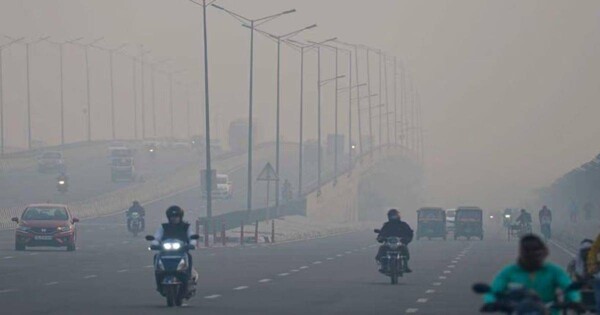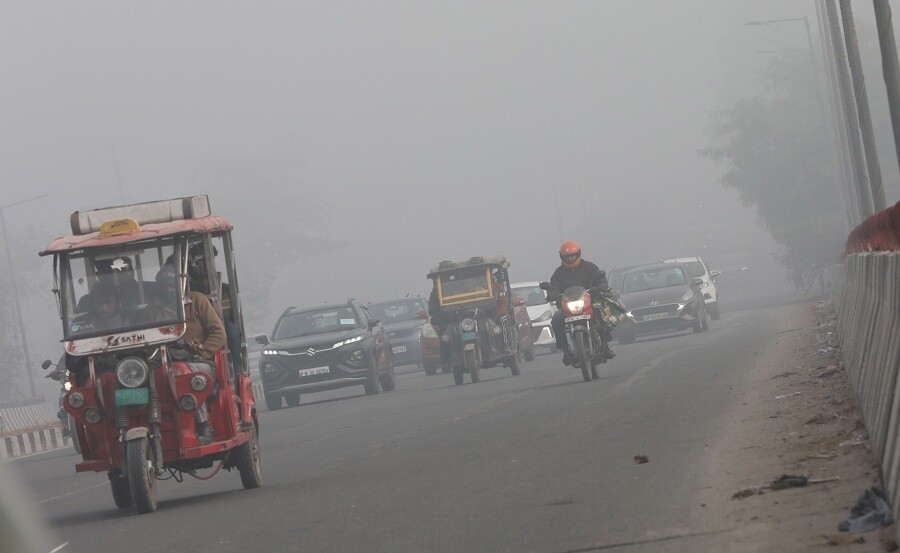
New Delhi was once again shrouded in a thick toxic cloud on Monday, reducing visibility to a minimum and forcing the cancellation of over a hundred flights at the country's main airport in one of the worst air pollution episodes of the year, according to official data.
«Aircraft operations are currently being conducted under CAT III conditions due to the dense fog, which may cause delays and cancellations,» reported New Delhi Airport on its X account. Category III (CAT III) of the landing system is activated when visibility is very low, as occurs during persistent fog episodes, frequent in the months of highest pollution in the Indian capital.
Data from monitoring platforms and the Central Pollution Control Board (CPCB) indicate that New Delhi recorded the worst air pollution levels of the year this weekend, with an Air Quality Index (AQI) in the 'severe' category, between 430 and 500 points, and peaks of up to 721 at some stations during the early morning hours.
The India Meteorological Department (IMD) warned of moderate to dense fog in the capital, with reduced visibility between 200 and 50 meters and sporadic episodes below that threshold in some areas.
Major airlines in the country, such as IndiGo and Air India, reported on X dozens of cancellations and over 300 delays due to low visibility, citing safety reasons. According to the Flightradar24 platform, the airport was operating at a maximum disruption level during the first hours of the day.
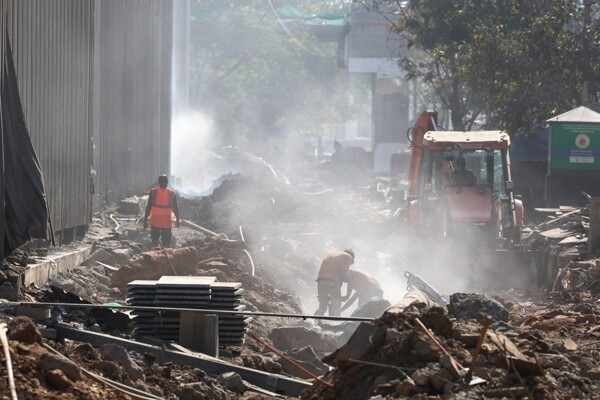
The authorities have activated Phase IV of the Graded Response Action Plan (GRAP), the strictest level of the protocol, which prohibits construction, restricts the most polluting vehicles, and promotes teleworking and hybrid education.
In this context, the concentration of fine PM2.5 particles, capable of penetrating the bloodstream, exceeded the World Health Organization's (WHO) recommended limits by more than 30 times on Monday.